How are DTCs restructuring their 3PL fulfillment strategy to recover from the current war?
4
min read

Post Khamenei's death, the situation between Iran and Israel escalated, engulfing the Middle East in it, which eventually worsened the war with the inclusion of the USA. The geopolitical tensions skyrocketed the oil price because of the closure of the Strait of Hormuz, which controls 20% of the world’s oil supply.
However, the 14-day ceasefire eased the tensions, but the impact is still there, leading to the supply chain and every 3PL fulfillment company still being affected because of
Delayed shipments
Higher insurance cost
Insane oil prices
Due to this, DHL rerouted to Cope of Hope, and Maersk halted their operations, but can DTCs afford it?
No!
They need a solution.
They need to find a way to still work and reach their customers.
In this blog, we will discuss what DTCs went through during the closure of the Strait of Hormuz and how they rerouted their 3PL fulfillment strategy to recover from the impact.
Impact of war on DTCs
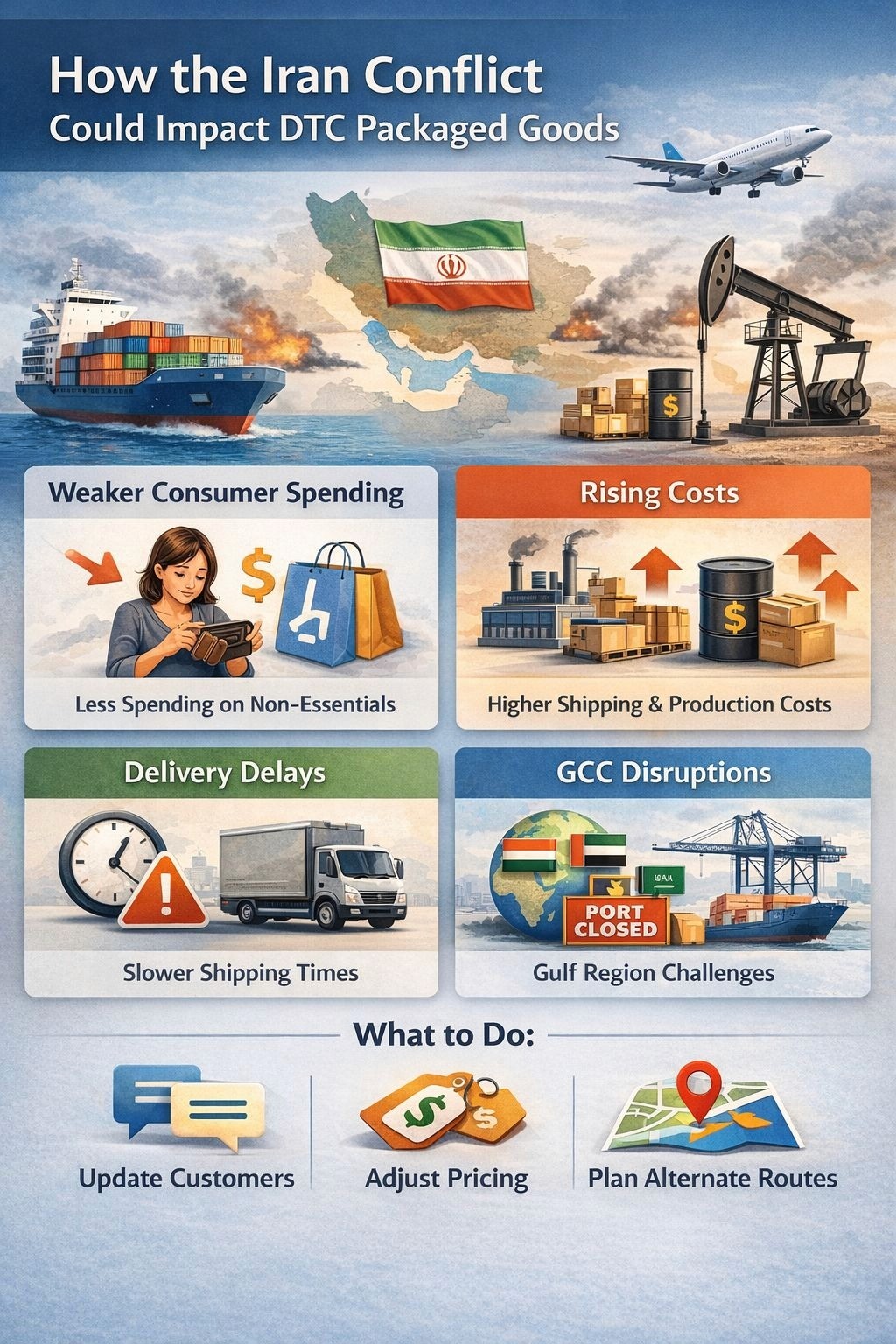
War’s impact initially was vivid on the supply chain, fulfillment, and warehousing industry, and then on DTCs because the latter is highly connected to cargo and freight. Therefore, they witnessed these outcomes.
GCC Logistics Disruptions
Major logistic companies, such as Maersk, were not operational in and out of GCC, due to which they had to look for alternatives to overcome the disruption.
Higher Production and Shipping Costs
The majority of the DTCs had to reroute to Cope of Hope, which eventually increased miles, leading them to pay more skyrocketed oil price. Consequently, it made the products pricier, which on large effected the product loss, leading many to have a loss or many to increase the cost of their product.
Longer Delivery Times
Shipments were delayed for 2 to 4 weeks or more because of the rerouting strategy and waiting to go through the Strait of Hormuz or the Suez Canal. This eventually delayed revenue because of creating cash flow problems.
Although the ceasefire eased the ways and gave room to logistics and supply chain, paving a way for them via channels to carry out operations, if the situation stays the same, it will eventually.
Reduce the consumer spending power:
People would focus on their needs, cutting their wants as nobody is up for paying high delivery costs or purchasing pricier products.Slow inventory:
It simply means that cash would disappear into the warehouse because the slow movement of SKUs piles up storage and opportunity costs.
What had DTCs done during the closure of the Strait of Hormuz
Classify
DTCs applied the old saying, don’t put all eggs in one basket. Instead of shipping all products from the Strait of Hormuz, the companies identified what needed to be shipped through the Middle East and flagged them before the freight forwarder called them. While they shipped the remaining ones via another route. It increased the prices to a certain extent instead of skyrocketing them.
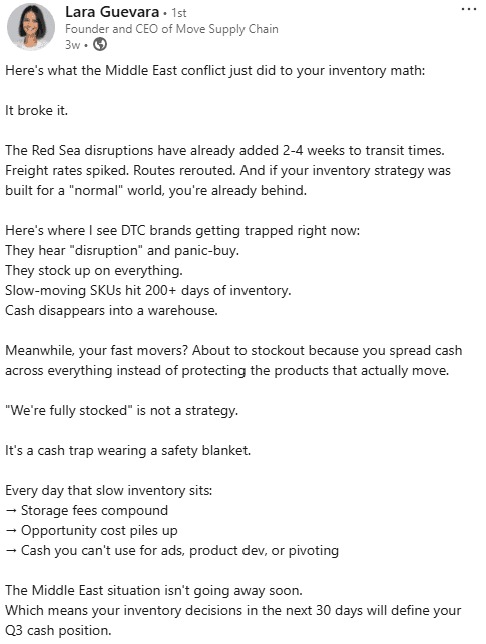
Stock up on everything.
Instead of sending all POs or purchase orders, many kept everything at the warehouse in fear of a price rise because the companies thought about how it would benefit them. However, they failed to understand that stocking them would bring more loss as warehouse costs would rise insanely, which brought more loss than losing money on giving products at lower prices to purchasers.
What should DTCs do?
The Middle East war won’t stop soon. DTCs need a plan to become resilient against this chaos. Here are a few things they can do
Stock out everything
Instead of saving everything in panic, the companies need to send out their POs and deliver all orders. They need to take orders to stock out everything, or the inventory cost would give them a shock. All their money would be spent on warehouses, due to which they won’t be able to spend on development, infrastructure, and ads.
Prioritize speed
Instead of saving money, DTCs need to collect data based on current scenarios to analyze with AI tools to determine how much the shipment would be slowed. Timely analysis would help the companies strategize how to send parcels. They can spread cash and utilize multiple routes to minimize the oil cost and get deliveries done as soon as possible.
Multiple warehouses
Instead of having one warehouse, the companies should partner with multiple warehouses - one warehouse in every country from where they get the most clients. This will help them reach their clients faster at better rates.
Conclusion
The Iran-Israel-US war seems to be a new normal for us in a few months, where we will see regular closure of the Strait of Hormuz. This geopolitical war has affected and continues to affect the supply chain, warehousing, and e-commerce industries. Yet DTC brands and every 3PL fulfillment company need to make their system resilient enough to overcome the impact of war. Relying solely on AI is not a solution because what’s AI without a direction? We need a strategy to overcome it cost-effectively by prioritizing speed, spreading out cash, and stocking out inventory to generate revenue with minimal profit, without putting ourselves in the red. For this, the whole fulfillment company has to work together to facilitate every DTC. At e53 Fulfillment, we work diligently with every brand to enable them to generate revenue even during chaos via our extensive audit, data, and analysis.
FAQs
Will the current situation downsize the fulfillment and warehousing industry?
No! Of course, but it will make every 3PL fulfillment company shift its strategy so it can make the same revenue as before the war.
How can 3PL fulfillment companies help DTCs make revenue during this situation?
Its answer is simple! They can collect data and, based on that, give them suggestions with assurance to stock out everything and spread out their cash to minimize the loss.
What’s the strategy of e53 Fulfillment right now?
e53 Fulfillment flags every Middle East delivery by connecting with the right partner. We have strategized the combination of AI and human effort to maximize the profit with reduced effort and loss to ensure our clients get the product and parcels on time, because time is currency in this age.
More Articles
Stay informed with the latest guides and news.